
Pharmacy Management Software Development
Run a Faster, Smarter & More Profitable Pharmacy Operation
Build pharmacy software that protects margins, keeps inventory moving, reduces dispensing delays, and gives pharmacy teams a clearer way to manage growing prescription volume without adding unnecessary operational burden.
The Capabilities Behind
High-Performing Pharmacy Operations
Prescription Intake Control
Capture incoming prescriptions accurately, identify missing or inconsistent information early, and route exceptions before they slow down dispensing.
Dispensing Workflow
Move prescriptions from intake through verification, filling, pharmacist review, and pickup with fewer manual handoffs and clearer work queues.
Claims & Authorization
Reduce billing delays by validating claim data, managing rejections, coordinating prior authorization status, and keeping staff focused on exceptions that need action.
Pharmacy Inventory Management
Keep stock aligned with prescription demand while reducing overstock, expiry risk, emergency ordering, and manual inventory checks.
Refill & Adherence
Identify refill gaps, coordinate medication synchronization, and trigger patient follow-up before missed refills become lost fills or adherence issues.
Specialty Medication Access
Handle higher-complexity medications with workflows for benefits verification, prior authorization, limited distribution, patient assistance, and fulfillment coordination.
Pharmacy Management Systems We Build
Our custom pharmacy management software development approach is built around the business model you operate,
the prescriptions you process, and the workflows that affect dispensing speed, inventory, reimbursement, patient access,
and pharmacy margins.
-
For Retail & Community
Pharmacies -
For Specialty & High-Cost
Medications -
For Long-Term Care &
Institutional Pharmacies -
For Multi-Location & High-Volume
Pharmacy Operations -
For Digital & Patient-Facing
Pharmacy Models
End-to-End Pharmacy Management Systems
Run prescription intake, dispensing, claims, inventory, refills, patient communication, and day-to-day pharmacy operations from one connected platform.
Pharmacy POS & Front-Store Platforms
Connect prescription pickup with retail transactions, payments, OTC inventory, promotions, and customer activity for better control beyond the pharmacy counter.
Specialty Pharmacy Platforms
Manage the additional steps required to get high-cost and specialty therapies from prescription to patient without losing visibility across access, approval, and fulfillment.
Medication Access & Authorization Systems
Give teams one workflow for resolving coverage barriers that delay therapy initiation or create repetitive back-and-forth with payers and prescribers.
LTC Pharmacy Management Systems
Support high-volume medication workflows across facilities, residents, cycle fills, packaging, delivery, billing, and medication administration coordination.
Multi-Dose & Compliance Packaging Platforms
Coordinate recurring fills, synchronized medications, packaging schedules, and delivery workflows for patients with complex medication regimens.
Central Fill & Multi-Store Platforms
Coordinate prescription workload, inventory, fulfillment, and transfers across multiple pharmacy locations or centralized dispensing operations.
Pharmacy Fulfillment & Delivery Platforms
Manage the operational steps between prescription readiness and successful patient delivery with better visibility into status, routing, and proof of receipt.
Digital Pharmacy Platforms
Create a connected prescription experience for patients who expect to request refills, manage medications, communicate with pharmacy teams, and track fulfillment digitally.
Medication Management Software
Extend the pharmacy beyond dispensing with structured workflows for medication management, immunizations, adherence programs, and other reimbursable clinical services.
Pharmacy AI That Keeps Prescriptions
Moving & Margins Protected
Spot refill gaps, claim exceptions, inventory risks, and dispensing bottlenecks earlier so pharmacy teams can act faster, reduce avoidable rework, and keep more prescriptions moving through fulfillment.
- Refill Risk Prediction
- Claim Exception Prioritization
- Inventory Demand Forecasting
- Prescription Queue Prioritization
- Workflow Bottleneck Detection
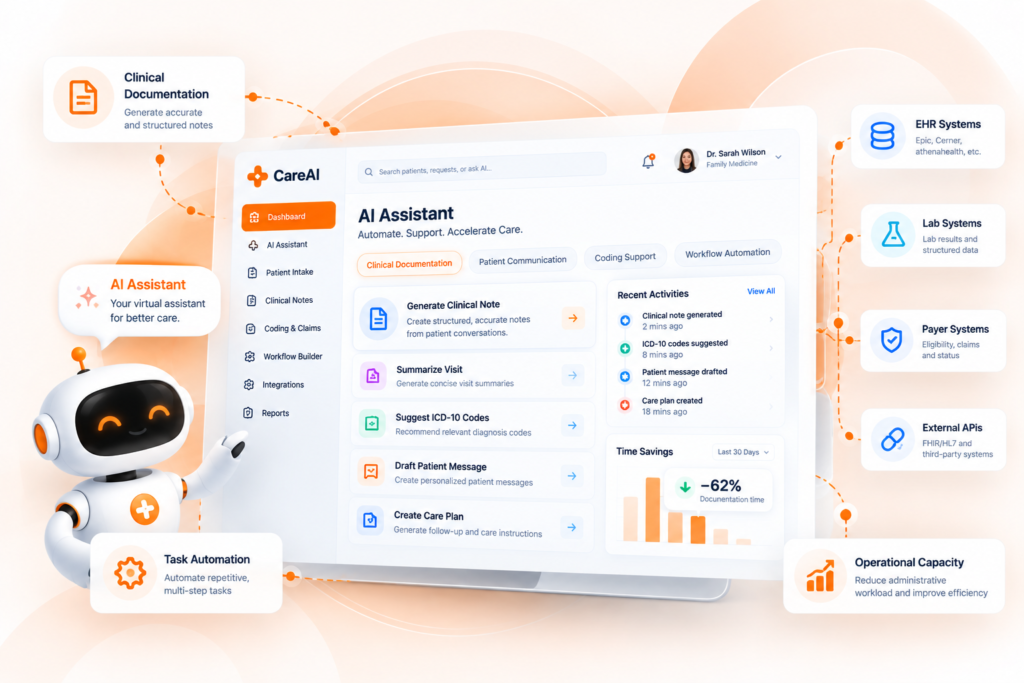
Pharmacy Systems & Platforms We Integrate With
E-Prescribing & Medication Networks
DrFirst
DoseSpot
SureCost
RxNav
Pharmacy Management Systems
Computer-Rx
Liberty Software
BestRx
QS/1
Rx30
PBM & Pharmacy Claims Networks
Express Scripts
CVS Caremark
Prime Therapeutics
Change Healthcare
Pharmacy Devices & Dispensing Systems
Barcode Scanners
Label Printers
Pill Counters
Medication Packaging Systems
POS Terminals
Inventory Scanners
Healthcare Interoperability Standards
NCPDP D.0
HL7 v2
FHIR
SMART on FHIR
REST APIs
EHR & Clinical Systems
Oracle Health
athenahealth
eClinicalWorks
NextGen Healthcare
MEDITECH
Drug & Clinical Data Sources
Medi-Span
RxNorm
NDC
DailyMed
DrugBank
Payment & Billing Systems
Authorize.net
Waystar
Availity
Office Ally
Identity & Access Management
Auth0
Microsoft Entra ID
AWS Cognito
OAuth 2.0
SAML
Cloud & Infrastructure
Microsoft Azure
Google Cloud
Kubernetes
Docker
Data & Analytics Platforms
Databricks
Microsoft Fabric
Azure Data Lake
Power BI
How We Approach Pharmacy
Management Software Development
Model the Pharmacy Operation
Typical timeline: 1–2 weeksWe map the pharmacy model before defining the software, because retail, specialty, LTC, central-fill, and multi-location operations do not follow the same workflow.
We map:
- Prescription intake channels
- Dispensing stages
- Pharmacist verification
- Claims and payer workflows
- Inventory movement
- Refill and med-sync processes
- Pickup, delivery, or shipping
- Existing pharmacy systems
A clear operating model showing where delays, rework, and manual dependencies are affecting pharmacy performance.
Design the Prescription Workflow
Typical timeline: 1–2 weeksWe define how each prescription should move from intake to fulfillment, including the conditions that change the normal path.
We define:
- Rx intake rules
- Work queues
- Verification checkpoints
- Claim exceptions
- Refill logic
- Prior authorization paths
- Hold and escalation rules
- Fulfillment routing
A structured workflow that keeps prescriptions moving while giving pharmacists control over exceptions and clinical review.
Connect Reimbursement & Inventory Logic
Typical timeline: 1–2 weeksWe design claims and inventory as part of the dispensing workflow rather than separate back-office functions.
We design:
- Real-time claim processing
- Rejection and rebilling paths
- Eligibility and coverage checks
- Stock reservation
- Reorder rules
- Wholesaler connectivity
- Expiry and lot controls
- Multi-location inventory
Better visibility into what can be filled, what is blocked, and where reimbursement or stock issues need attention.
Build the Pharmacy Experience
Typical timeline: 8–16+ weeksWe build high-value pharmacy workflows in prioritized releases so teams can validate the actual dispensing operation early.
We build and integrate:
- Prescription processing
- Pharmacist work queues
- Claims workflows
- Inventory management
- Refill and med-sync
- Patient communication
- POS or payment workflows
- Delivery and fulfillment
- Operational dashboards
A working pharmacy platform that reduces repetitive handling and makes daily prescription operations easier to manage.
Validate Pharmacy Exceptions
Typical timeline: 2–4 weeksWe test the scenarios that create the most operational disruption rather than validating only clean prescription flows.
We validate:
- Rejected claims
- Insufficient stock
- Duplicate prescriptions
- Refill-too-soon cases
- Prior authorization delays
- Prescription changes
- Failed ePrescriptions
- Partial fills
- Delivery failures
- System and interface outages
A release-ready platform that keeps pharmacy teams productive when real-world exceptions occur.
Improve Pharmacy Performance
OngoingAfter launch, we refine workflows using actual dispensing, claims, inventory, and fulfillment data.
We optimize:
- Prescription turnaround
- Claim rework
- Fill queue backlog
- Inventory turns
- Stockouts and expiry
- Refill completion
- Staff workload
- Delivery performance
- Multi-location workload
- Platform performance
A pharmacy system that supports higher prescription volume, tighter inventory control, and more efficient operations as the business grows.
What Makes Us a Trusted Pharmacy Management Software Development Company
We build pharmacy software around NCPDP standards, EPCS controls, HIPAA safeguards, HL7/FHIR, RBAC, encryption, and audit trails to support safer prescribing, more reliable claims processing, stronger medication data integrity, and better control across dispensing workflows.






Know What Your Pharmacy Software Development Will Cost Before You Build
Your pharmacy model and operational complexity shape the investment. We’ll help you define the right scope around prescription workflows, integrations, fulfillment needs, and rollout priorities so you can plan the build with better cost visibility.
Why Choose HealthApp Systems
01
Pharmacy Workflow Depth
With 18+ years of healthcare technology experience, we understand the operational realities behind prescription intake, dispensing, claims, inventory, refills, specialty workflows, and fulfillment.
02
Margin Protection
Design around the areas that quietly erode pharmacy margins—claim rework, stock imbalance, expired inventory, repetitive handling, and inefficient fulfillment.
03
Lower Workload
Reduce manual effort across prescription processing, refill coordination, claim exceptions, inventory checks, patient communication, and delivery workflows through better automation.
04
Faster Implementation
Move priority pharmacy workflows into production sooner with phased delivery, reusable healthcare integration patterns, and early validation of dispensing, claims, and inventory logic.
05
Connected Operations
Integrate ePrescribing, EHRs, pharmacy networks, wholesalers, claims systems, POS, delivery platforms, and patient-facing tools without creating fragmented workflows.
06
Compliance Readiness
Build with secure access, audit trails, controlled prescription workflows, protected health information handling, and the traceability needed for pharmacy and healthcare operations.
Have a Pharmacy Workflow
You Want to Fix?
If claim issues, inventory gaps, refill delays, or manual pharmacy workflows are slowing operations, we’ll help shape the right platform around your priorities.
- Move prescriptions faster
- Reduce claim rework
- Improve inventory control
- Cut manual pharmacy work
Frequently Asked Questions
It should support the full pharmacy operation, including prescription intake, pharmacist verification, claims, inventory, refills, patient communication, fulfillment, reporting, and integrations.
The exact scope depends on whether the pharmacy operates as retail, specialty, LTC, central-fill, mail-order, or a combination of models.
Incoming prescriptions should be normalized before entering the dispensing workflow, with incomplete or conflicting information clearly flagged for pharmacist review.
The platform may also need to support new prescriptions, refill requests, changes, cancellations, medication history, and electronic prior authorization workflows.
Claims should move through real-time adjudication with clear visibility into paid, rejected, reversed, and pending transactions.
Your team should be able to quickly identify why a claim failed and route eligibility, coordination of benefits, rebilling, prior authorization, or payer exceptions without maintaining separate manual worklists.
Yes, but controlled-substance workflows require stronger identity, access, security, and audit controls than standard prescriptions.
The platform should preserve prescription history, pharmacist review, controlled access, and the traceability required around controlled medications.
Inventory decisions should respond to dispensing activity rather than static reorder levels alone.
Prescription demand, refill patterns, open prescriptions, current stock, expiry dates, wholesaler availability, and location-level usage can all help reduce both stockouts and excess inventory.
Traceability should be embedded into receiving and inventory workflows rather than treated as a separate compliance process.
The system should support product-tracing records and make it easier to investigate suspect or illegitimate products when additional verification is required.
Yes, but each operating model should have its own configurable workflows.
Retail may prioritize fast dispensing and pickup, specialty needs stronger access and authorization workflows, LTC depends more on cycle fills and facility coordination, while central-fill operations require workload routing and multi-location fulfillment.
Prior authorization should sit directly inside the prescription workflow so coverage barriers are visible before they stall fulfillment.
The platform can route PA-required prescriptions, track status, surface missing information, and coordinate payer or prescriber follow-up without relying on separate spreadsheets or manual queues.
The system should identify which medications are due, which prescriptions still have valid refills, and which patients need prescriber outreach.
Medication synchronization should also account for partial fills, medication changes, insurance restrictions, pickup or delivery preferences, and the patient’s refill cycle.
Yes. Wholesaler integrations can support ordering, availability, purchasing, and inventory updates, while automation integrations can connect dispensing robots, pill counters, packaging systems, and pickup technology.
These systems should remain synchronized with prescription status so automation does not create a separate operational workflow.
Focus on metrics that show where prescriptions, reimbursement, inventory, and staff time are being lost.
Useful measures include prescription turnaround time, fill queue backlog, claim rejection rate, claim rework, inventory turns, stockouts, expired inventory, refill completion, fulfillment performance, and staff workload per prescription.
Start with the workflows that directly affect whether a prescription can be safely and successfully filled.
Validate patient and prescription migration, active refills, controlled-drug workflows, claims, inventory balances, wholesaler integrations, prior authorization status, delivery workflows, audit history, user permissions, open prescriptions, reversals, and fallback procedures before cutover.